Dead Tree Removal in Central MN
Spring came and went, and one of your trees never leafed out. Or maybe the bark is falling off in sheets, or the top of the tree has been bare for a couple of years now. A dead tree doesn't stay put forever, and the longer it stands, the more dangerous it gets.
In The Woods Tree Care provides dead tree removal for homeowners and property owners throughout Central Minnesota. We safely take down dead and dying trees, clean up completely, and help you reclaim the space.
What Is Dead Tree Removal?
Dead tree removal is the safe cutting down and hauling away of a tree that has died or is dying. Dead trees dry out and lose strength over time, so they're more likely to drop branches or fall without warning. Removing them before that happens protects your home, vehicles, and family, and it's often safer and simpler than waiting until the tree fails.
Is My Tree Dead? How to Tell
It isn't always obvious, especially in winter when every deciduous tree looks bare. Here are simple ways to check.
Do the Scratch Test
Use your fingernail or a pocketknife to scrape a small spot of bark on a twig or small branch. Green, moist tissue underneath means that part of the tree is alive. Brown, dry tissue means it's dead. Test several spots around the tree, since some branches can die while others survive.
Bend a Few Twigs
Living twigs bend. Dead twigs are dry and snap easily.
Look for Leaves and Buds
A tree that doesn't leaf out in spring, or has no healthy buds on its branches, is likely dead or in serious decline.
Check the Bark
Bark that's loose, cracking, or falling off in large pieces is a common sign of a dead tree.
Look at the Base
Mushrooms, fungus, or soft, crumbly wood at the base of the tree can point to rot and decay.
If you're not sure, we can take a look. We'll tell you honestly whether the tree is dead, dying, or still worth saving.
Dead, Dying, or Just Dormant?
A Dormant Tree
A dormant tree is alive and resting for winter. It has no leaves, but its twigs bend, its buds are healthy, and it passes the scratch test.
A Dying Tree
A dying tree is in decline. It may have dead branches, a thinning canopy, and leaves on only part of the tree. Some dying trees can be helped with pruning, but many can't recover.
A Dead Tree
A dead tree has no living tissue left. It won't come back and will only get weaker over time.
Why Trees Die in Central Minnesota
What Happens When You Leave a Dead Tree Standing
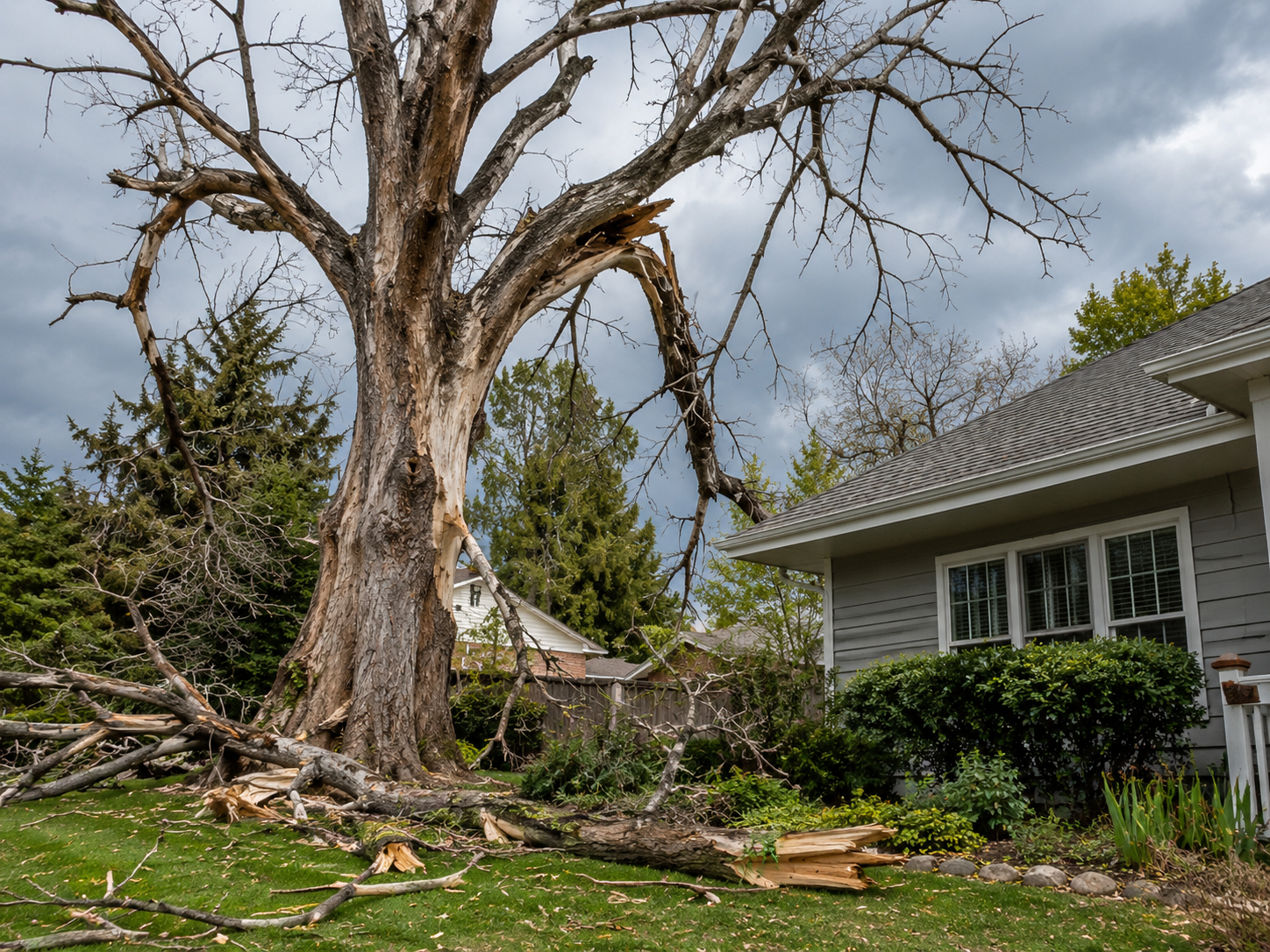
A dead tree doesn't fall all at once. It breaks down in stages. First, small twigs and branches start dropping. Then larger limbs become brittle and can snap in wind or under heavy snow. As decay spreads into the trunk and roots, the whole tree can fail, sometimes on a calm day with no warning at all.
Along the way, a dead tree can attract wood-boring insects and become harder and more dangerous to remove. Brittle wood is unpredictable when it's cut, which is why dead tree removal should be done sooner rather than later, and by a professional.
Does Every Dead Tree Need to Come Down?
Not always. A dead tree deep in the woods, far from your home, trails, and anywhere people spend time, may pose little risk, and it can provide habitat for birds and wildlife.
A dead tree near your house, garage, driveway, fence, play area, or power lines is a different story. Those trees should be removed. We'll look at where the tree is and what it could hit, and give you an honest recommendation. We never pressure customers into unnecessary work.
Our Dead Tree Removal Service
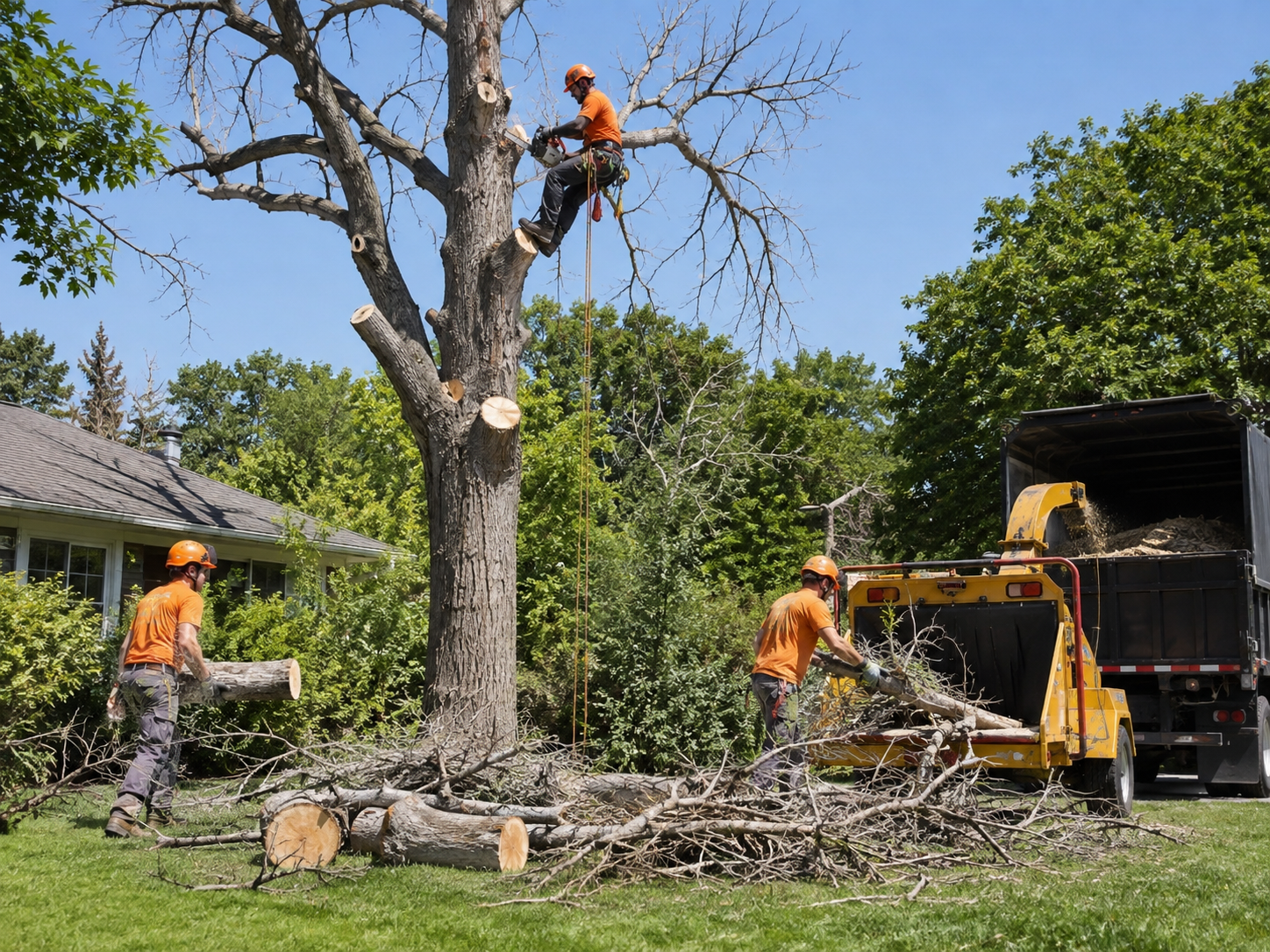
We carefully evaluate every dead tree and the property around it to determine the safest and most effective way to take it down. Dead and dying trees require extra care because their wood is weakened, so we plan each removal to protect nearby structures, landscaping, and your property.
After the tree is down, we haul away the wood and debris and leave your job site cleaner than we found it. Want the stump gone, too? Ask about our stump grinding service. If you have several dead trees, or dead trees mixed in with healthy ones, we can handle them all in one project.
Making Room for New Growth
Losing a tree can be hard, especially one that's been part of your property for years. But removing a dead tree clears the way for something new, whether that's a new tree, a garden, or simply open space.
Kristie Jones and Travis Moshier know something about fresh starts. They founded In The Woods Tree Care after overcoming addiction and rebuilding their lives, and they bring that same belief in new beginnings to every job. With Travis's 20+ years of tree care experience behind the work, you can trust us to handle your dead tree removal safely and honestly. Rooted in Safety. Built on Sobriety.
Read Our StoryDead Tree Removal FAQs
How can I tell if a tree is dead?
Can a dead tree come back to life?
How long can a dead tree stand before it falls?
Is it safe to cut down a dead tree myself?
Can dead trees be removed in winter?
How much does dead tree removal cost?
Get That Dead Tree Taken Care Of
Don't wait for a dead tree to drop a limb on your roof or car. Call In The Woods Tree Care at 320-333-6776 or request a free quote for dead tree removal in Central Minnesota and surrounding areas. If you're not sure whether your tree is dead or just hazardous, learn more about our hazardous tree removal services.