Hazardous Tree Removal in Central MN
Some trees give you a warning before they fall. A lean that's getting worse. A crack running up the trunk. A dead ash that hasn't leafed out in two years. The best time to remove a hazardous tree is before it comes down on its own.
In The Woods Tree Care provides hazardous tree removal for homeowners, businesses, and property owners throughout Central Minnesota. We safely remove dangerous trees that threaten your home, vehicles, and family, on your schedule instead of the storm's.
What Is Hazardous Tree Removal?
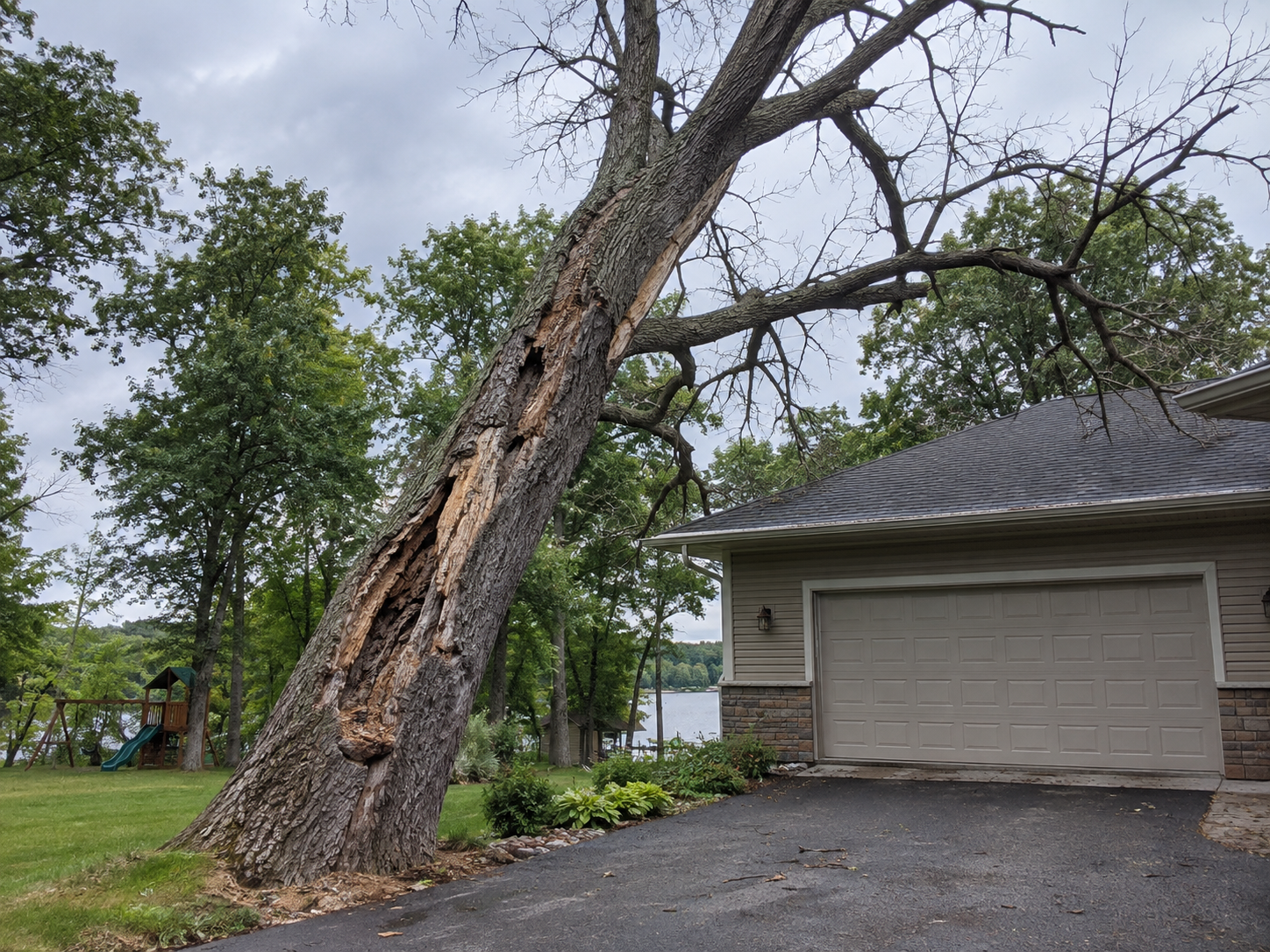
Hazardous tree removal is the planned, careful removal of a tree that has a structural problem and could fall on something or someone. A tree is considered hazardous when two things are true: it has a defect, such as decay, cracks, dead wood, or a dangerous lean, and it's close enough to a home, driveway, play area, or other target to cause damage if it fails.
Because hazardous trees are already weakened, they can't always be felled like a healthy tree. Removing them safely takes experience and a carefully planned approach.
How to Spot a Hazardous Tree: A Ground-Up Check
You don't need to be a tree expert to notice the warning signs. Walk around your tree and look from the ground up.
At the Roots and Base
- Mushrooms, fungus, or soft, crumbling wood at the base
- Soil cracking or heaving on one side of the tree
- Roots that were cut or damaged by digging, trenching, or construction
- Cavities or hollow areas near the ground
On the Trunk
- Deep cracks or splits in the bark and wood
- A lean that's new or has gotten worse over time
- Large areas of missing bark or sunken, dead sections
- Two main trunks joined in a tight V, especially with a crack between them
In the Canopy
- Dead branches or large sections without leaves
- Broken limbs hanging in the tree after a storm
- Heavy limbs extending over your roof or driveway
- Thinning leaves or early leaf drop across the tree
Around the Tree
- Your house, garage, or other structures within reach if it falls
- Driveways, vehicles, walkways, decks, or play areas below it
- Power lines running through or near the canopy
If you see one or more warning signs, and there's something the tree could hit, it's time for a professional assessment.
Trees That Commonly Become Hazardous in Central Minnesota
Dead and Dying Ash Trees
Emerald ash borer has killed ash trees across Minnesota. Dead ash trees become brittle quickly and can drop limbs or break apart without warning, which makes them one of the most common hazardous trees in the state.
Storm-Damaged Trees
A tree that made it through a storm isn't always safe. Cracked trunks, split crotches, and hanging limbs can leave it one strong wind away from failing.
Trees With Root Damage
Construction, trenching, and grading can cut through a tree's roots. The tree may look healthy for a while, but damaged roots can leave it unstable and prone to decline.
Old, Decaying Trees
Large, older trees often hide internal decay. When a tree near your home is showing its age, a professional assessment can tell you whether it's still safe.
How We Remove Hazardous Trees Safely
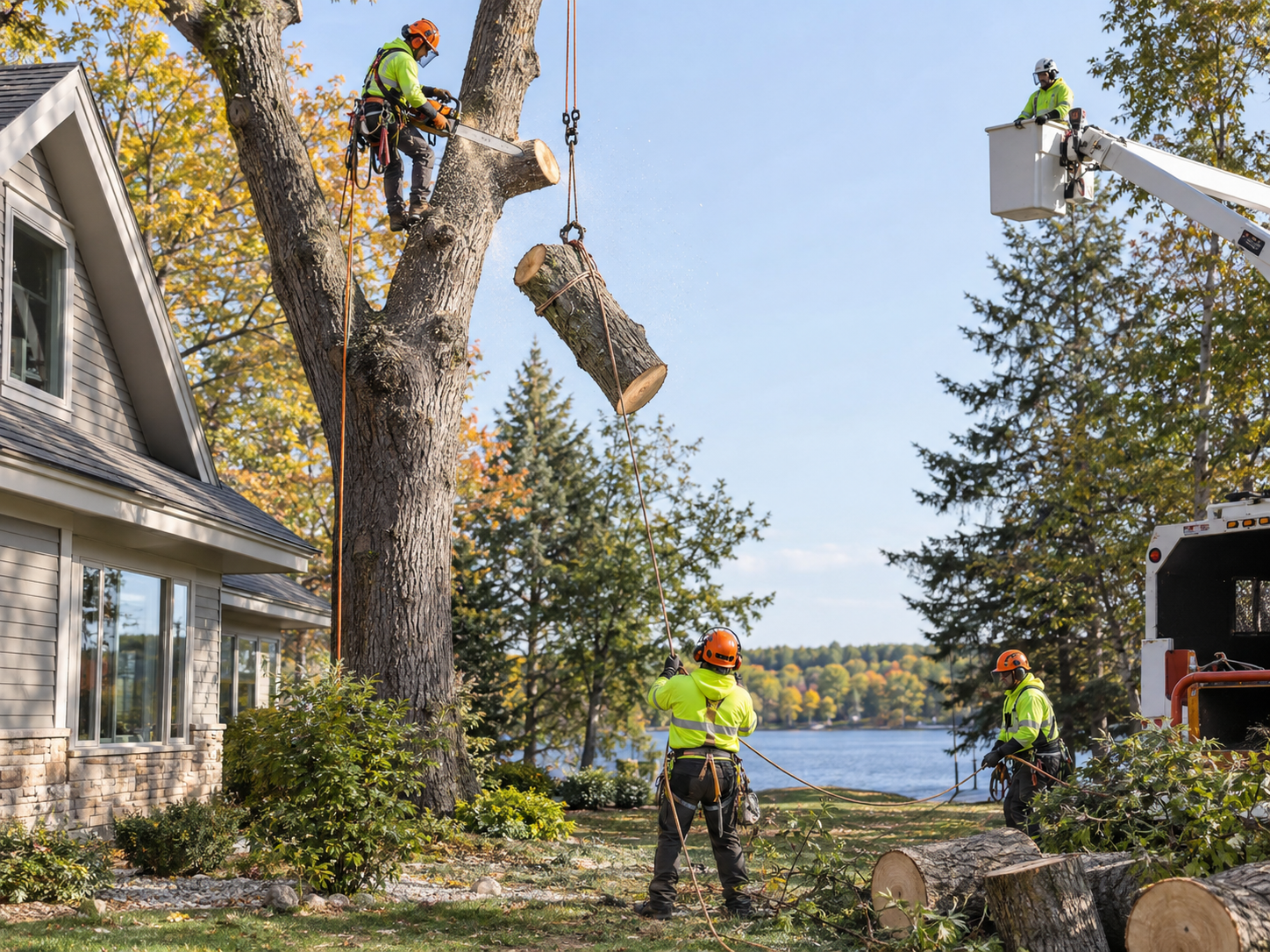
A weakened tree can behave unpredictably when it's cut. That's why every hazardous tree removal starts with a careful look at the tree and your property. We evaluate its condition, its lean, and everything around it to determine the safest and most effective approach.
From there, we remove the tree in a controlled way that protects nearby structures and keeps your property safe from potential damage. When the tree is down, we clean up the debris and leave your job site cleaner than we found it. If you'd like the stump gone, too, we offer stump grinding.
Can a Hazardous Tree Be Saved?
Not every tree with a problem needs to come down. If the hazard is limited to one dead or damaged limb, pruning that limb may be enough to make the tree safe again. If the problem is in the trunk, roots, or across much of the tree, removal is usually the safer choice.
We'll give you an honest answer. We never pressure customers into unnecessary work, and if tree pruning or trimming can fix the problem, we'll tell you.
Hazardous Tree Removal vs. Emergency Tree Removal
Hazardous Tree Removal
Hazardous tree removal is planned. It takes care of a dangerous tree before it fails, when there's time to schedule the work and approach it carefully.
Emergency Tree Removal
Emergency tree removal is needed after a tree has already fallen or is actively coming down. If a tree is on your home, vehicle, or driveway right now, see our emergency tree removal service or call 320-333-6776.
Why It Pays to Act Early
It's easy to put off dealing with a tree that's still standing. But a hazardous tree doesn't get safer with time. Once it fails, the cost can include damage to your roof, vehicles, fences, or worse, plus an emergency removal under much more difficult conditions. Removing a hazardous tree on your schedule is almost always safer, simpler, and less stressful.
Rooted in Safety, First and Always
Our motto starts with safety for a reason. Hazardous trees are some of the most dangerous work in our industry, and they're where experience matters most. Travis Moshier brings more than 20 years of hands-on tree care experience to every hazardous tree removal we take on.
The second half of our motto, Built on Sobriety, is our story. Travis and Kristie Jones founded In The Woods Tree Care after overcoming addiction, and the clear-headed focus and accountability recovery taught them are exactly what hazardous tree work demands. Rooted in Safety. Built on Sobriety.
Read Our StoryHazardous Tree Removal FAQs
What makes a tree hazardous?
Is a dead tree dangerous?
Is a leaning tree always hazardous?
Will insurance pay to remove a hazardous tree before it falls?
Am I responsible if my hazardous tree falls on my neighbor's property?
How much does hazardous tree removal cost?
Don't Wait for a Hazardous Tree to Fall
If a tree on your property is showing warning signs, call In The Woods Tree Care at 320-333-6776 or request a free quote. We serve Central Minnesota and surrounding areas with safe, professional hazardous tree removal. Explore our full tree removal services to learn more.